 Previously posted at Medium here.
This is possibly one of the most complicated things I’ve ever written. That’s not because I shy away from tough subjects. I’ve been writing online since 2002, contributed to books and other publications, and written two of my own books discussing things like religion, politics, and mental illness.
This is more complicated than all of those because going deep into my history to look at things I’ve always viewed one way, but now realize the very foundation I grew from, and have stood atop, is different than I knew, different than I counted on to support me, is understandably scary.
My people are religious, conservative, patriotic Republicans. Defending the constitution and our country is synonymous with living a Christlike life. We are “Good People,” salt of the earth. It would be easy to shorten this entire piece to, “I Now Realize My Dad Is Racist,” but that wouldn’t be the whole story. It wouldn’t feel fair, while technically true. And it wouldn’t explain how easy it is to be racist and not know it.
Let me tell you one version of my dad. This version of Dad is in his mid-eighties and is happening now. He’s still physically fitter than some his age. He can climb the stairs with some help. He enjoys the outdoors and has a walk every day. He does not know my name, nor who I am, and can’t utter more than a few syllables of any word because he can’t recall how to say them. He sometimes has a soft chuckle that dissipates as soon as it hits the air around his lips. He is mostly pleasant and amiable and we appreciate that because we’ve heard stories of dementia or Alzheimer’s patients who are combative at this stage.
Dad chokes on his food and we all stop, frozen in place, conversation suspended mid-sentence, mid-chew, until the danger passes. We do not welcome the day he won’t be here with us anymore, while at the same time, accepting it will be sooner rather than later. We speak well of him, always, because to do otherwise would be disrespectful and he was, and is, a good man. We make an effort not to speak of him in the past tense, as in, “Dad used to love that, didn’t he,” because he seems more gone than here sometimes, even while sitting across from you at the table.
An earlier version of Dad, from 1986, is the one that sends me to John Birch Society Camp where I learn about communism and how white people should be smarter than believing Black people could ever be a part of white society, because Separate But Equal is correct and a combined society is a communist plot that Black folks are just not smart enough to understand.
This version gets the Phyllis Schlafly Report every month in the mail. It’s the one who pulls out his Dancin’ Sam to entertain the grand kids, a black-face-painted wooden puppet with legs and arms that go round and round, swinging to the beat, while he slaps the paddle under its feet, insisting it dance. This version of Dad will weep at a patriotic song, is a member of the local Mormon Battalion reenactment group, and rides the lead horse while wearing full regalia in the parade. He is strong and charismatic. He sings loudly, beautifully, and plays the piano with gusto. He puts up flags along the main streets before dawn on the 4th of July, Pioneer Day, and other holidays. He recites poetry, loves the Founding Fathers, and is the hardest-working person I know. He’ll give you a quarter if you can make him laugh. He’ll pay you a dollar if you memorize and recite a poem.
This version of my dad is well-beloved by the small town we live in. He’s a doctor and doesn’t turn anyone away who can’t pay, including the Native Americans from the reservation, and his office holds pottery, sand paintings, and textiles he’s taken in trade for life-saving procedures when they insist on giving him something.
He’s a public servant. He picks up trash along the side of the road in his “spare time,” of which he has none, but which he seems to find anyway. He speaks fondly of his mother and the dog he had as a child. He loves little children. He is faithful to my mother. He strives to provide well for his family. He tries to help us all understand how to work hard. I watch him speak in church, eyes shining with the Spirit, and witness the people who come up to thank him after services. He is uncomfortable with the praise. He’s a humble man. Everywhere I go in town, people know my dad and love and respect him. He would tell you the KKK was a terrible, hateful organization.
An even earlier version of my dad is from the late 1930s. He’s got a younger brother and they are best friends. They swim in the canal next to the orchard they take care of. They don’t have running water in the house, which has dirt floors. They are very poor. He stares out at me from the black and white photo, both of them wearing swim trunks held up with rope, skinny arms and dark eyes, choppy hair. They live among the citrus trees in Arizona, a place very few people call home, let alone minorities.
Going through my father’s photo albums, which he, himself, has meticulously created over the years, I see him grow up from a skinny child who is mostly limbs, to a young adult sporting a crew-cut and who looks cooler in faded jeans and a checked shirt while holding a couple of cats than anyone could ever hope to.
And then I flip the page and freeze, I stop breathing, as I see a newspaper piece, carefully cut out and pasted on the thick album paper with rubber cement. “Minstrel’s Cotton Blossom Sextet” the headline says, and the image shows three couples in blackface and costumes, including my father, who is getting ready to be “Moe” in a song and dance routine at his college. The year is somewhere in the late 40s or early 50s.
How do I reconcile this man? My heart feels heavy and complicated. Is it obvious I love him? Because I do. I want to excuse his behavior. I want to tell him how hurt I am seeing this. I want to tell him how disappointed I am that he didn’t teach me better. I want to protect him from anyone who might think ill of him. I understand on an even deeper level how complicated people are and how they are many things at once. He is the dad I love and also deeply flawed in this way.
Here’s what I think I know about my dad: he is at once both racist and not, or in other words, he’s accidentally racist. You could replace “accidentally” with other words like ignorant, oblivious, thoughtless, and indifferent and you wouldn’t be wrong. This doesn’t excuse it, but it does help explain how an otherwise compassionate man could also be racist. And, I think when looking from this vantage point, anyone could examine themselves and see where they might be doing the same thing. We have to be fearless in truly seeing ourselves.
My Dad has the disadvantage of his upbringing. He has unexamined bias and prejudice. He would also give anyone the shirt off his back, if they needed it. He used his medical training to help everyone, no matter their skin color, or if they had the ability to pay. He is kind and wants to help others, which is why he became a doctor. He lived in Puerto Rico for two years and continued to talk about how much he loved the people there. And he grew up in, and continued to live in, areas where minorities were mostly hidden on reservations or in neighborhoods he didn’t go to often.
He listened to extreme-right Republican political talking heads. His patriotism and racism somehow converged to be one and the same. Taking care of his own family and his own country came first. He would carelessly talk about another race, not understanding how what he was saying was so hurtful. But then, he would get up at 3am and race to help someone who wasn’t white, at no cost to them, because he loved everyone.
My discomfort with extreme patriotism starts to become clearer as I look through his albums of photos and newspaper clippings. I have never understood my father’s ability to cry while talking about the Founding Fathers or while listening to a patriotic song. I do not feel it as he does. I love my country, yes, but I don’t believe we are The Best and The Only who deserve freedom or a livable wage or all the best toys. Running water. Electricity. Peace. Equality. And I regret the way white people go into other countries and replace the local customs and rituals and spirituality with our white versions, as if ours are better than theirs.
I’d like to think that if he was still of sound mind I could talk this over with him, reason with him, and he would tell me he regrets the racism he participated in and perpetuated by not thinking very hard about it. I’d want him to tell me that he sent me to JBS camp to learn more about how the USA meddles in foreign affairs and less because he wanted me to believe that white people know better than other races. I’d want him to tell me that he’d changed and evolved over the years and that he was proud of me for changing and evolving, too. That anyone could change and evolve if they understood and wanted to.
But, what if he didn’t? What if he told me he thought being in blackface in a college skit was hilarious? That his Dancin’ Sam was just good, family fun? What did he think about civil and social justice in 2000 or 2005 before his mind began to fade? What would he think now of a President Trump? And for the first time in years I’m maybe glad I can’t talk to him because I’m afraid of his answers. I’m a coward.
***
It feels impolite to speak of my father this way. He’s still alive but unable to explain himself, although I would hope he wouldn’t feel attacked. I choose to speak of him and share these things because I know I’m not the only one. I am a part of a generation who came from a generation who was accidentally or purposefully racist. The times, they were a’changin’.
You had to pick a side in the 60s. You were either promoting equality or you weren’t, right? But, what if you lived in a white town, in a white state, in a white part of the country, and it didn’t seem real to you because there was no one to defend, or stand up for, where you lived? It’s the difference between belonging to the KKK, marching with Martin Luther King, Jr., or simply being on vacation while the 60s happened. Privileged, yes. But I’d like to believe it wasn’t malicious.
I was born in the 70s, and where I grew up, everyone was white. I lived in a white town, in a white state, in a white part of the country, and race things didn’t seem to apply to me. We were all accidental racists. And I raised my kids accidentally racist, because they had my example and carelessness and misunderstanding about how other people lived. I accept my part and my laziness, which my white privilege affords me, but I am angry, so angry, at the part public education, with textbooks provided from Texas, played in my ignorance.
It’s not that my kids never had friends who weren’t white. They did. But I didn’t teach them about what that meant, because I didn’t know. I didn’t see color. I treated everyone the same. God loves everyone the same, I said on numerous occasions.
***
About ten years ago, a few years after I had realized just the beginnings of a justice awakening, in that place where you understand theoretically why something is wrong but before you feel it inside yourself, I was with my husband around a campfire when someone told a racist joke. I felt uncomfortable. I didn’t laugh. I looked down. I said nothing. My husband loudly asked why that person felt that joke was appropriate. An awkward silence followed. I was simultaneously mortified and exhilarated. I didn’t know you could do that, just speak right up and pin someone to the nasty thing they had said, with no apology.
I felt proud to be his wife in a way I couldn’t explain. I grabbed his hand. I still didn’t dare look those people across the fire in their eyes, but I learned something so valuable that day.
***
When Ferguson happened, I was sad and angry, but I wasn’t lit. I didn’t look around, horrified, and jump into action. I looked around, saddened, drank my coffee, and prayed. I followed the news. I left comments on Facebook threads. I gave my condolences. I hoped that the fighting would stop and that people wouldn’t get hurt anymore, while not understanding anything about why it was happening and that it can’t stop until people like me take part. Black Lives Matter confused me.
I am the white person who learned, agonizingly slowly, why it mattered that Black people were getting mowed down carelessly or with great malice and with no justice.
When Orlando happened, it hit closer to home. I’m bisexual, and I felt those deaths in my bones. I wept. I wanted to DO something. And some of those people were Black and I read a piece by a Black queer man asking why more people cared about Orlando than Ferguson, which broke his heart because they were all his people.
Maybe because I was in a fragile state when I read his piece, it made it possible for me to be open to hearing everything he wrote. I really took it in. I felt it deeply. And I asked myself some tough questions.
Why do I say I love everyone equally and think about them as my brothers and sisters and yet do nothing to help them in a real and physical sense?
Why didn’t I speak up louder, more forcefully, unmistakably, when someone made a racist joke to say I didn’t find it funny and name it — Racist?
What kind of a friend was I to my friends of color if I didn’t have empathy for their stories and pain? Why was I afraid to witness with them the horrors they and their families had lived through?
What good was my caring heart and my tears if they didn’t lead to action?
Why didn’t I know my own history?
***
I felt ashamed when I understood how accidentally racist I had been my entire life. That shame lasted the better part of a week, during which I cried a lot and read a lot and watched a lot of documentaries and sent a few apology emails and messages to some of my friends of color.
The responses I received were varied, but the main point expressed over and over again was simply, “Thanks or whatever, but don’t apologize. Get busy and change things.”
Stop being accidentally racist and be an Intentional Activist.
And still, I did not really change. I learned more. I accepted reality further. I sat with feeling uncomfortable. But my life, for all intents and purposes, was exactly the same and stayed that way for months longer.
***
I recently had a post go viral. Thousands of people read something I wrote about listening with empathy to People of Color without getting defensive and hundreds watched the follow-up video where I tried to answer the question that had been hitting my inbox several times a day, mostly from people of color, “Leah, why do you care about social and civil justice? What happened to make you care?”
They were looking for a story. An incident that happened to change my heart. A defining moment where I went from racist to activist. A reason to trust me.
Even after asking myself the hard questions and answering them as honestly as I could after the Orlando shooting incident, I didn’t spur into action until November 9, 2016, the day after Trump was elected as our next president, because finally, finally, it affected me more than I could ignore.
My white privilege had protected and cocooned me and if Hillary Clinton had become our president, I doubt I would be the activist I am now. And for that I will always be sorry, because what I’ve learned since then is that it has always been affecting me, I was just too lazy to notice. I was a Good Person. I just wasn’t a very great one or a socially conscious one or a truly and thoroughly kind one or an empathetic or awake one or one willing to have the tough conversations even when people I love get uncomfortable.
The knowledge of the massacres and obliteration of tribes of Native Americans didn’t change me. Mostly because in many Christian religions, including the one I was raised in, this land was foreordained and promised as a gift to the white colonialists who “conquered” it. God saved it for them. There is so much in that seed of propaganda that dissecting it would take years.
The knowledge of the way our government routinely used people of color here in the USA and around the world as guinea pigs for medical treatments and medical experiments didn’t change me because I thought it was long before my time. It’s not. It still happens.
The knowledge that this country was built on slavery didn’t change me because I didn’t know what that meant. Not really. It was abstract and I believed it was all over and besides, I hadn’t been a part of all that. The new racial caste system, the school-to-prison pipeline, wasn’t a thing I understood.
The knowledge that the KKK lynched people of color didn’t change me because the KKK and other white supremacy organizations were mostly long-gone before I was born. Only, they weren’t. They never left and they’re coming back stronger than ever and with 2000% less shame than before.
The knowledge that unarmed Black people are killed while white people are given a thousand chances, coddled, and brought in for questioning even when they are heavily armed bothered me, but it did not change me, because I did not witness the pain of my friends of color. I prayed for them. I did not feel it with them.
These and dozens of other things did not change me.
It took a maniacal, sexist, misogynistic, xenophobic, selfish, catastrophically under-qualified white man, who reminded me of some people I grew up with, for me to finally change.
***
I recently watched the film, I Am Not Your Negro, which is done in James Baldwin’s own words and TV clips. It’s a film that captures you immediately with the truth and does not let you go until the credits begin to roll. It’s a piece of genius by Haitian filmmaker Raoul Peck. You need processing time after this film. You need to weep, witness horrors, and then get back to work.
Mr. Baldwin says something near the end of the documentary, after he’s called out our moral apathy, which should go straight to the heart of any Christian unwilling to get involved in this fight.
He says,
“What white people have to do, is try and find out in their own hearts why it was necessary to have a nigger in the first place, because I’m not a nigger, I’m a man, but if you think I’m a nigger, it means you need it.”
I have been pondering this deep and hard. In my health & wellness work, so much of the emotional processing a person does is about how they feel about their place in their family, in their community, in their churches and all the places where we see Othering.
I was the Other in my family. Many people who I work with were or are their family’s Other. History tells us tribes have always had Others as ways to make the core part of the tribe, the Inside People, feel stronger. Ostracizing those who won’t follow tribe rules makes everyone else feel like keeping the rules in the future.
Tribes survive by conquering their enemies. It’s a matter of life and death. And if we don’t have enemies, we create them because it feels good to band together. It’s not just the smaller tribes, it’s our own country’s way to go to war to bring the American people all to the same side when a current administration feels like they need that.
Dear White People — why have we done this Othering to People of Color? Why do we need someone to hate and oppress? Why have we not evolved past our ancient tribe dynamics to a place where we can accept all as equal and repair with equity the tragedies we’ve perpetrated? Are you willing to give anything up so that others can have what they need?
When will we have enough wealth, property, things, and status that we no longer have to try and hold on to it with our talons, never sharing the good stuff we’ve accumulated and making sure no one else can get close?
Can we be honest with ourselves? Can we move past being simply “Good People” and be truly good? Can you stop being an accidental racist and move into being an intentional activist?
Like my mom used to always say after I’d accidentally hurt my younger brother many times in one day, “Leah, you have to mean NOT to, if you don’t want to hurt someone. It’s not enough to say sorry after repeatedly hurting them on accident. Do better.”
***
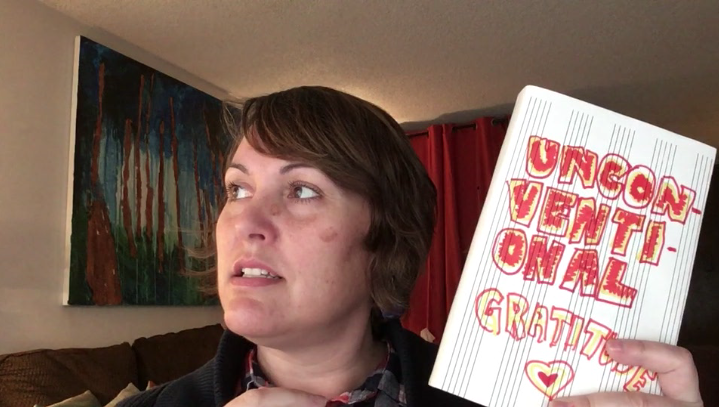
I’m currently writing a book about Unconventional Gratitude. Would you like support me? Click here to watch the video.

 Parts 1 & 2 of a podcast I did with Valerie Orth from League of Badass Women is live today. I get personal and talk about how instrumental Joe Crawford was in my process of coming out. <3
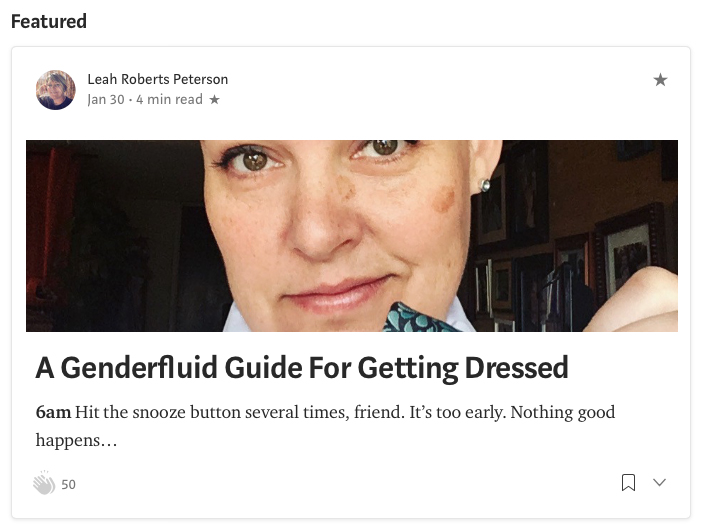

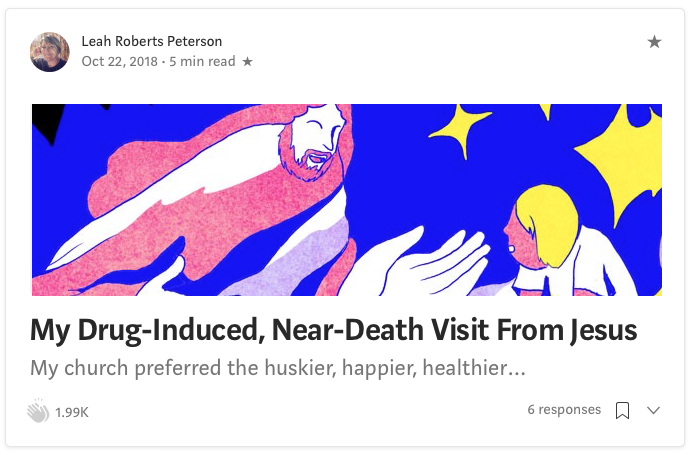


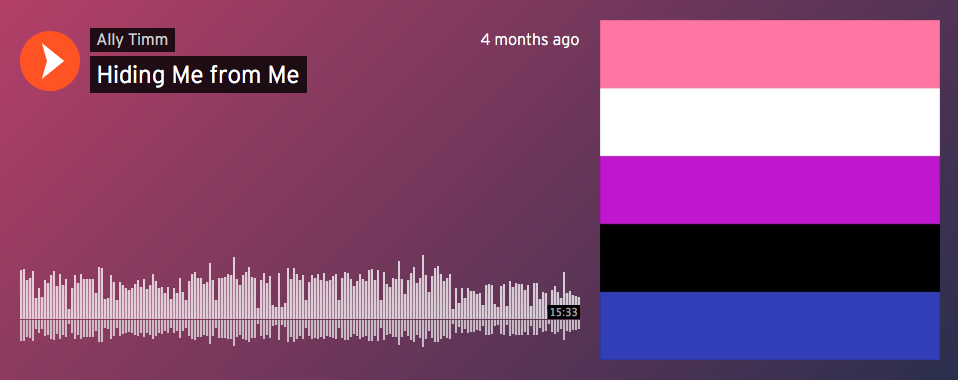 I was asked by Ally Timm to share my thoughts and feelings about being genderfluid. You can listen to the


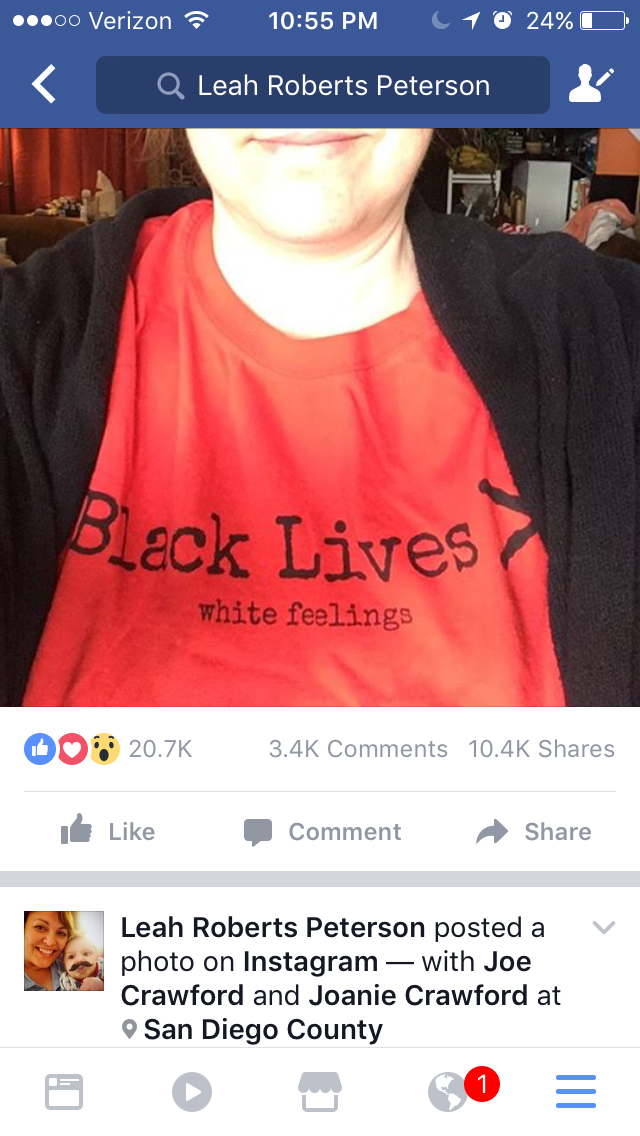

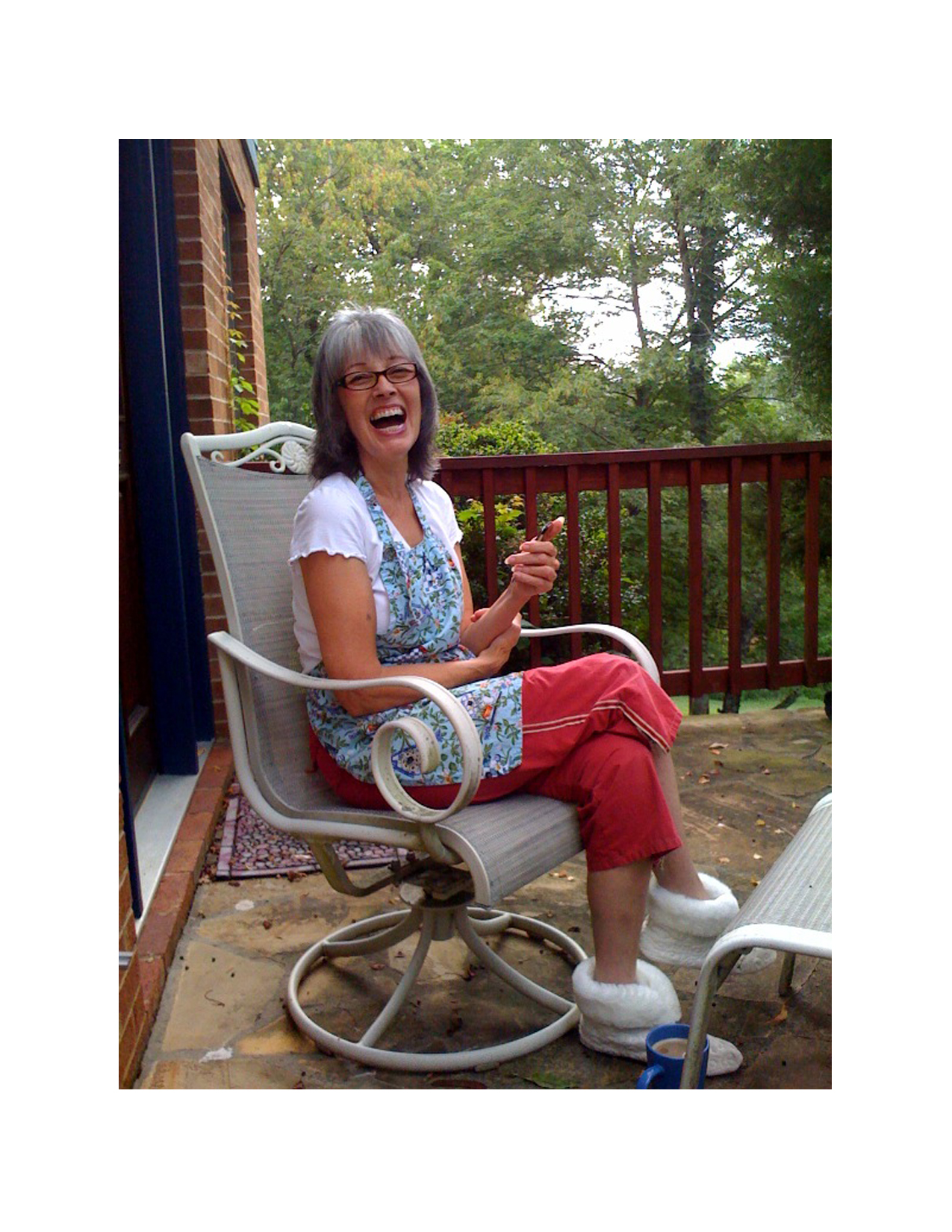
 You’ve probably heard of the campaign I’m running over on Kickstarter for my new book, Unconventional Gratitude. It’s a collection of letters to important women in my life and a reminder to look for ways to overcome getting caught in the downward swirl of depression in these trying times. So, if you’re sitting unshowered in your jimmy-jams on the couch unable to make sense of the world outside, but you did get to eat a donut sometime earlier, so at least you have that going for you – this book is for you.